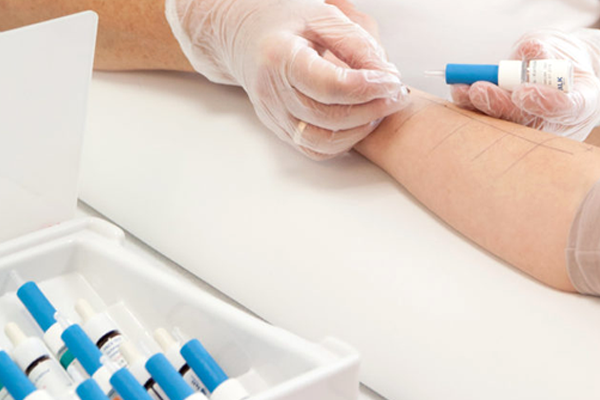
A second reading takes place at 72 hours, and sometimes later, to detect delayed reactions typical of allergic contact dermatitis. Based on the pattern and intensity of reactions, the dermatologist identifies the allergens responsible for the eczema.
Patch testing is indicated when allergic contact dermatitis is suspected, in chronic or recurrent eczema, or when redness, itching, blisters or scaling appear on areas exposed to metals (e.g. nickel), cosmetics, perfumes, soaps, detergents, gloves, glues, dyes or specific occupational products. It is particularly useful to distinguish irritant eczema from true allergic contact eczema, helping to pinpoint the exact cause of skin inflammation.