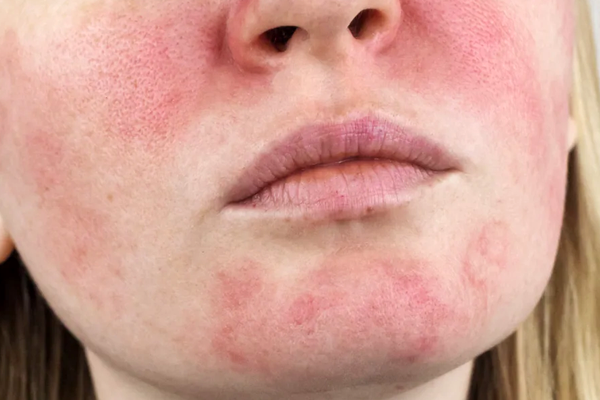
Couperose, a vascular form of rosacea, appears as a network of dilated capillaries on the face, mainly on the cheeks, cheekbones and sides of the nose, often forming a characteristic red “butterfly” pattern. It is more common in fair, sensitive skin types that overreact to temperature changes: heat causes capillary dilation, cold causes constriction, and when vessels lose elasticity, redness becomes persistent. Poor hydration and protection of the skin can worsen the condition, and in some patients couperose is also associated with seborrhoeic dermatitis of the face.
Likely contributing factors include insufficient protection against environmental stress (heat, cold, sun, UV, wind, humidity), excessive intake of alcohol, caffeine and stimulating foods, digestive or liver–intestinal disorders, vitamin C and PP deficiency, hormonal factors (elevated corticosteroids, menopausal hot flushes), emotional triggers causing vasodilation and an underlying genetic predisposition.